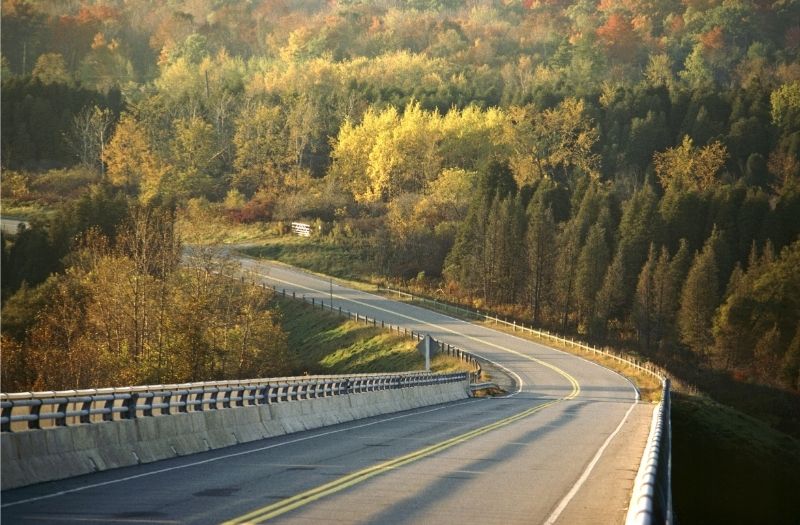
Ontario’s provincial parks are destinations in their own right, but sometimes it pays to explore beyond the campground. Many parks are surrounded by winding highways, quiet backroads, lakeside communities, forests, rock cuts, and viewpoints that can turn an ordinary drive into part of the adventure.
A scenic drive is also a great addition to a camping trip. It can give tired legs a break after a long hike, provide something to do when the weather is less than perfect, or simply let you see more of the region you travelled to visit.
From the forests of Algonquin to the rugged Lake Superior shoreline, here are some scenic drives worth adding to your next Ontario provincial park trip.
Highway 60 Through Algonquin Provincial Park
Few roads are as closely associated with an Ontario park as Highway 60 through Algonquin Provincial Park. The highway corridor stretches approximately 56 kilometres through the southern portion of the park, connecting the West Gate and East Gate.
Along the way, you’ll pass forests, lakes, wetlands, rocky ridges, campgrounds, trailheads, and some of Algonquin’s most popular attractions. You could drive straight through, but that would miss much of what makes this route special.
Good places to stop include:
- Canoe Lake
- Lake of Two Rivers
- Spruce Bog Boardwalk
- Algonquin Visitor Centre
- Algonquin Logging Museum
- One of the many hiking trailheads along Highway 60
Ontario Parks lists eight campgrounds and 14 interpretive trails along the Highway 60 corridor, making it easy to turn a drive into a full day of exploring.
Wildlife sightings are also possible. Moose are among Algonquin’s most famous residents, although drivers should never stop suddenly or block traffic to get a photograph.
Summer is beautiful, but fall transforms this route. The maples can turn the surrounding hills into brilliant displays of red, orange, and yellow, which is why Highway 60 becomes one of Ontario’s busiest fall-colour drives.
Highway 17 Through Lake Superior Provincial Park
If you want dramatic scenery, Highway 17 through Lake Superior Provincial Park is hard to beat. This part of the Trans-Canada Highway travels through rugged Northern Ontario terrain with frequent glimpses of Lake Superior.
The landscape feels considerably wilder than most drives in Southern Ontario. Boreal forest, rocky cliffs, beaches, rivers, and enormous stretches of blue water make the journey feel like a road trip even if you’re only heading out from your campsite for the afternoon.
Possible stops include:
- Agawa Bay
- Lake Superior Provincial Park Visitor Centre
- Old Woman Bay
- Sand River
- Scenic lookouts and picnic areas
- Short hiking trails accessed from Highway 17
Agawa Bay Campground sits directly on Lake Superior along a three-kilometre beach, while numerous hiking trails and park access points are located along Highway 17.
If you’re approaching from Sault Ste. Marie, the scenic driving begins well before the park. Batchawana Bay is another worthwhile stop, with Ontario Parks specifically highlighting the views along Highway 17 in this area.
Give yourself plenty of time. This is the type of route where you may repeatedly find yourself saying, “We should stop here.”
Highway 637 to Killarney Provincial Park
The drive to Killarney Provincial Park feels like you’re gradually leaving the busier world behind.
Highway 637 branches west from Highway 69 and winds toward Killarney through forests, lakes, wetlands, and exposed rock. As you get closer to the park, the scenery begins to show the geological features that make Killarney so distinctive.
The area is known for:
- White quartzite ridges of the La Cloche Mountains
- Pink granite along Georgian Bay
- Clear blue lakes
- Jack pine forests
- Rugged Canadian Shield landscapes
Ontario Parks describes Killarney as a wilderness landscape of white quartzite ridges, pink granite, and more than 50 exceptionally clear lakes. George Lake Campground provides access to beaches, hiking trails, and paddling opportunities.
Don’t necessarily turn around when you reach the park. Continue another approximately 10 kilometres to the historic village of Killarney on Georgian Bay.
The combination of Highway 637, Killarney Provincial Park, and the village makes this an easy full-day outing. Fall adds another layer of colour as the surrounding hardwoods contrast with the white quartzite hills and dark evergreens.
Scenic Backroads Around Bon Echo Provincial Park
Bon Echo Provincial Park is best known for Mazinaw Rock, but the surrounding Land O’ Lakes region deserves some exploring too.
Highway 41 is the main route through the area, but smaller roads leading away from it can take you through cottage country, forests, lakes, and quiet rural communities. This is less about one famous highway and more about taking your time and wandering.
A day around Bon Echo might include:
- A morning hike in the park
- Time beside Mazinaw Lake
- A drive through the surrounding countryside
- A picnic beside a lake
- A stop in one of the region’s small communities
This part of Eastern Ontario is particularly attractive in fall. Hardwood forests surrounding the lakes provide beautiful colour without always attracting the same volume of traffic found along Algonquin’s Highway 60 corridor.
It’s a good destination for campers who enjoy finding their own route rather than following a tightly planned itinerary.
Explore the Lake Huron Shore From Pinery Provincial Park
Not every great Ontario scenic drive involves granite cliffs and Canadian Shield wilderness.
Pinery Provincial Park offers an entirely different experience along the Lake Huron shore. Here, you can combine beaches and dunes with rural farmland, small towns, and some of Ontario’s best sunsets.
From the Pinery and Grand Bend area, consider exploring communities farther north along the Lake Huron coast, including:
- Bayfield
- Goderich
- Smaller beaches and waterfront areas along the way
You could spend the morning hiking or swimming at Pinery, then head out for an afternoon drive. Stop for lunch, walk along a waterfront, browse a few local shops, and slowly work your way back toward your campsite.
Try to time the final part of the drive for sunset. Lake Huron sunsets can turn even the drive back to camp into one of the most memorable parts of the day.
Drive the Bruce Peninsula and Georgian Bay
The Bruce Peninsula offers another opportunity to build a scenic drive around an Ontario camping trip.
Highway 6 is the main north-south route, but the real fun often begins when you leave it. Side roads lead toward Lake Huron and Georgian Bay, opening up opportunities to discover beaches, cliffs, harbours, forests, and small communities.
Provincial parks that can be incorporated into a longer trip through this region include:
Continue north and you can visit Wiarton, Lion’s Head, and Tobermory. Bruce Peninsula National Park is also nearby if your road trip includes both provincial and national parks.
Rather than rushing directly up Highway 6, leave time for detours. A road that heads toward Georgian Bay or Lake Huron may lead to exactly the kind of quiet viewpoint or waterfront stop that makes a road trip memorable.
This is an especially good region for a multi-day camping trip where exploring by car is part of the plan.
Take a Park-to-Park Drive Across Northwestern Ontario
If you have more than an afternoon to spare, Northwestern Ontario offers scenic driving on a much larger scale.
Highway 17 follows the Trans-Canada Highway through vast stretches of forest and rugged Canadian Shield country. Lake Superior regularly appears along the route, while rivers, cliffs, beaches, and waterfalls provide plenty of reasons to stop.
Several provincial parks can form the basis of a longer park-to-park trip, including:
- Neys Provincial Park
- Rainbow Falls Provincial Park
- Kakabeka Falls Provincial Park
- Sleeping Giant Provincial Park
You could also extend the trip eastward to include Lake Superior Provincial Park, turning the journey into a major Northern Ontario camping road trip.
Distances are much greater here than in Southern Ontario. Fuel stations, restaurants, and services can be farther apart, so plan ahead and avoid waiting until the fuel gauge is nearly empty before looking for a gas station.
The extra planning is worth it. This is the Ontario of huge skies, long stretches of wilderness, and roads where the journey can be just as impressive as the campground waiting at the end.
Tips for Planning a Scenic Drive From Your Campsite
A scenic drive should feel relaxed, not like another item you need to complete on a schedule.
Choose a reasonable distance and leave room for unexpected stops. You might find a short hiking trail, waterfront picnic area, roadside lookout, or small town you had never planned to visit.
Before leaving camp:
- Fill your fuel tank, especially in Northern Ontario
- Carry drinking water and snacks
- Bring a sweater or rain jacket
- Download maps if cellular service may be unreliable
- Check road and weather conditions
- Pack binoculars and a camera
- Bring comfortable shoes for short walks
- Tell someone your route if you are travelling into a remote area
Watch carefully for wildlife, particularly around dawn and dusk. Moose and deer can appear suddenly, and hitting a large animal can have serious consequences.
Remember that the driver’s job is to drive. Pull safely off the road at designated areas when you want to enjoy a view or take photographs.
When Is the Best Time for an Ontario Scenic Drive?
There really isn’t a bad time for a scenic drive during Ontario’s camping season. Each part of the year offers something different.
Spring brings rushing rivers, waterfalls, fresh greenery, and generally smaller crowds. Some seasonal facilities may not yet be open, however, so check before travelling.
Summer provides the longest days and the greatest number of options. You can combine driving with hiking, swimming, paddling, beaches, picnics, and visits to nearby communities.
Fall may be the most spectacular season of all. Algonquin, Killarney, Bon Echo, and other forested areas can explode with colour during September and October.
Fall weekends can also be extremely busy at popular destinations. Consider travelling during the week or leaving early in the morning if you want a quieter experience.
Take the Long Way Back to Camp
Camping gives you a base from which to explore, and sometimes the best thing you can do is get in the car and see what lies beyond the park boundary.
Ontario’s provincial parks are surrounded by lakes, forests, highways, country roads, waterfalls, lookouts, beaches, and communities that are easy to miss when you focus only on reaching your campsite.
Whether you’re following Highway 60 through Algonquin, watching Lake Superior appear around a bend on Highway 17, heading toward the white quartzite hills of Killarney, or wandering the backroads near Bon Echo, don’t always choose the fastest route.
Sometimes taking the long way back to camp is the whole point of the drive.
