Category: Balsam Lake Provincial Park

  • The Best Ontario Provincial Parks for Fall Colours

    The Best Ontario Provincial Parks for Fall Colours

    Fall is one of the most beautiful times of year to explore Ontario’s provincial parks. Forests that were green all summer suddenly turn brilliant shades of red, orange, yellow, and gold, creating some of the best scenery of the year.

    For campers, hikers, photographers, and anyone who enjoys spending time outdoors, autumn offers plenty of reasons to visit a provincial park. Cooler temperatures make hiking more comfortable, biting insects are usually less troublesome, and many parks become quieter once the busy summer season ends.

    The challenge is deciding where to go. Ontario has dozens of provincial parks where you can enjoy fall colours, but a few stand out for their forests, lakes, rocky viewpoints, and hiking trails.

    Here are some of the best Ontario provincial parks for enjoying fall colours.

    Algonquin Provincial Park — Ontario’s Classic Fall Colour Destination

    When most people think about fall colours in Ontario, Algonquin Provincial Park is probably one of the first places that comes to mind. Its rolling hills, hardwood forests, rocky ridges, and countless lakes create the classic Ontario autumn landscape.

    Sugar maples are responsible for many of the brilliant reds and oranges that appear across Algonquin in the fall. Later in the season, yellow birches, aspens, and tamaracks add another wave of colour.

    There are several excellent places to experience the scenery along the Highway 60 corridor.

    Popular options include:

    • Lookout Trail, which climbs to a spectacular viewpoint over surrounding forests.
    • Track and Tower Trail, offering forests, lakes, historical sites, and elevated views.
    • Booth’s Rock Trail, where hikers can enjoy impressive views over Rock Lake.
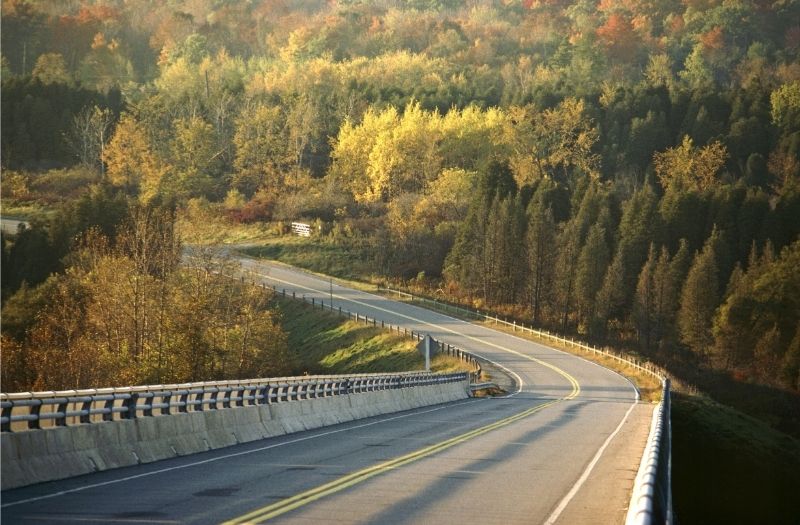
    • Highway 60, which offers plenty of colourful scenery even if you are simply driving through the park.

    Algonquin can become extremely busy during peak fall colour season, particularly on weekends. If possible, visit during the week and plan your trip ahead of time.

    You may also want to visit later in the season. Once the bright red maples begin dropping their leaves, the forest often shifts toward yellows and golds, creating a completely different but equally beautiful landscape.

    Arrowhead Provincial Park — Beautiful Muskoka Fall Scenery

    Located near Huntsville, Arrowhead Provincial Park is another excellent destination for autumn colours. It offers many of the scenic features people associate with Muskoka, including hardwood forests, rocky terrain, lakes, and winding rivers.

    One of the park’s best-known viewpoints is Big Bend Lookout. From the viewing platform, you can look down on the Big East River as it curves through the surrounding landscape.

    When autumn colours arrive, the view becomes especially impressive.

    Arrowhead also has several hiking trails worth exploring in the fall:

    • Arrowhead Lake Trail circles the lake through mixed forest.
    • Stubb’s Falls Trail leads to a scenic waterfall surrounded by trees.
    • Beaver Meadow Trail passes through wetlands and wooded areas.
    • Big Bend Lookout provides a rewarding view without requiring a long hike.

    Arrowhead Lake Trail circles the lake through mixed forest.

    Stubb’s Falls Trail leads to a scenic waterfall surrounded by trees.

    Beaver Meadow Trail passes through wetlands and wooded areas.

    Big Bend Lookout provides a rewarding view without requiring a long hike.

    Arrowhead makes a good alternative for visitors who want a classic central Ontario fall experience without travelling deep into Algonquin Provincial Park.

    Like many popular parks, however, Arrowhead can still become busy during peak autumn weekends. A weekday visit often provides a quieter experience.

    Bon Echo Provincial Park — Fall Colours Around Mazinaw Rock

    Bon Echo Provincial Park offers one of the most distinctive autumn landscapes in Ontario.

    The park’s best-known feature is Mazinaw Rock, a massive cliff rising above Mazinaw Lake. When the surrounding forest turns red, orange, and yellow, the contrast between the rock face, colourful trees, and dark blue water can be spectacular.

    Visitors have several ways to enjoy the scenery.

    You can explore trails such as:

    • High Pines Trail, which passes through mature forest.
    • Shield Trail, featuring Canadian Shield landscapes and mixed woodland.
    • Cliff Top Trail, reached from across Mazinaw Lake and offering elevated views.

    Even if you are not planning a long hike, spending time along the shoreline can provide excellent views.

    On calm days, fall colours reflecting on Mazinaw Lake can make the scenery even more dramatic. Photographers may want to visit early in the morning or later in the afternoon when softer light highlights the cliffs and colourful trees.

    Bon Echo is also worth considering for a later-season autumn trip, depending on park operating dates and conditions.

    Killarney Provincial Park — Dramatic Autumn Landscapes

    Killarney Provincial Park has a very different appearance from many other Ontario parks.

    Instead of endless rolling hardwood forests, Killarney combines colourful trees with rugged white quartzite ridges, dark evergreens, exposed rock, and clear lakes. That mixture makes the park particularly impressive in autumn.

    Bright red and yellow leaves stand out dramatically against the pale ridges of the La Cloche Mountains.

    Several trails provide excellent fall scenery.

    Consider exploring:

    • Granite Ridge Trail, which leads to viewpoints over surrounding forest and lakes.
    • Cranberry Bog Trail, a shorter trail through several different habitats.
    • Lake of the Woods Trail, offering views of the park’s rugged landscape.

    Killarney is an especially good choice for hikers and photographers looking for something different from the traditional maple forests of central Ontario.

    Some trails in Killarney can be challenging. Rocky terrain, wet conditions, and rapidly changing fall weather mean good footwear and proper preparation are important.

    Frontenac Provincial Park — A Quieter Place for Fall Hiking

    If your idea of a perfect autumn trip involves hiking through quiet forests rather than visiting crowded viewpoints, Frontenac Provincial Park deserves consideration.

    Located north of Kingston, Frontenac offers an extensive trail system through Canadian Shield terrain, forests, wetlands, and lakes.

    The park has more than 100 kilometres of hiking and backpacking trails. That makes it particularly attractive to visitors who want to spend several hours—or even an entire day—surrounded by fall colours.

    Popular hiking options include:

    • Doe Lake Loop, a relatively accessible introduction to the park.
    • Dedication Trail, offering a longer and more challenging hike.
    • Numerous interconnected loops for experienced hikers and backpackers.

    Doe Lake Loop, a relatively accessible introduction to the park.

    Dedication Trail, offering a longer and more challenging hike.

    Numerous interconnected loops for experienced hikers and backpackers.

    Frontenac does not have the same famous roadside viewpoints as Algonquin, but that is part of its appeal.

    Instead of arriving at one major lookout, you experience the landscape gradually as you hike through forests, along rocky ridges, and beside quiet lakes.

    Sleeping Giant Provincial Park — Northern Ontario Fall Colours

    For anyone planning a fall trip to northwestern Ontario, Sleeping Giant Provincial Park offers spectacular scenery.

    Located near Thunder Bay on the Sibley Peninsula, the park combines forests, towering cliffs, and expansive views over Lake Superior.

    Fall colours here can look quite different from those found farther south. Golden birches and aspens often mix with dark green conifers, creating broad patches of yellow and gold across the landscape.

    Visitors can explore several scenic areas, including:

    • Thunder Bay Lookout, offering dramatic views over Lake Superior.
    • Highway 587, which passes through colourful forest on the way into the park.
    • Top of the Giant Trail, a challenging hike that rewards experienced hikers with outstanding views.

    Because Sleeping Giant is considerably farther north than parks such as Algonquin or Bon Echo, fall colours can arrive earlier.

    Anyone planning a trip should check current colour conditions before travelling.

    Other Ontario Provincial Parks Worth Visiting in the Fall

    The most famous parks are not necessarily the only places to find great autumn scenery. Smaller or less crowded provincial parks can provide equally memorable experiences.

    Consider adding these parks to your fall travel list:

    Exploring less-famous parks can also make fall trips more relaxing. You may find quieter trails, easier parking, and more opportunities to enjoy the scenery without large crowds.

    When Is the Best Time to See Fall Colours in Ontario?

    There is no single weekend when fall colours peak everywhere in Ontario.

    The province covers a huge geographic area, so autumn arrives at different times depending on latitude, elevation, local weather, and tree species.

    Northern Ontario usually changes first. Central Ontario often follows, while areas farther south may continue showing colour later into October.

    Weather also matters. Warm sunny days and cool nights can influence colour development, while strong wind or heavy rain can quickly strip leaves from trees.

    Before heading out, check the Ontario Parks Fall Colour Report for current conditions.

    The report can help you determine:

    • How much of the forest has changed colour.
    • Which colours are most prominent.
    • How much leaf fall has occurred.
    • Which areas of a park offer good viewing opportunities.

    If your schedule is flexible, monitoring the report for several days can help you choose the best time to visit.

    Tips for Planning a Fall Provincial Park Trip

    Autumn park visits require slightly different preparation than summer trips.

    Temperatures can change quickly, especially early in the morning and after sunset. A warm afternoon can easily turn into a cold evening.

    Before leaving home:

    • Autumn park visits require slightly different preparation than summer trips.
    • Temperatures can change quickly, especially early in the morning and after sunset. A warm afternoon can easily turn into a cold evening.
    • Before leaving home:
    • Dress in layers.
    • Bring a waterproof jacket.
    • Wear sturdy hiking shoes or boots.
    • Carry water and snacks.
    • Check trail and weather conditions.
    • Confirm park operating dates and available facilities.
    • Reserve a daily vehicle permit when required.
    • Bring a camera or binoculars if you enjoy photography or wildlife watching.

    Popular parks can become extremely busy during peak colour weekends. Arriving early or visiting during the week can make the experience much more enjoyable.

    Campers should also remember that many services begin closing as the season progresses. Some campgrounds, comfort stations, stores, and other facilities may operate on reduced schedules during autumn.

    Finding Your Favourite Ontario Fall Escape

    Ontario’s provincial parks offer an incredible variety of fall landscapes.

    Algonquin delivers the classic maple-covered hills many people associate with an Ontario autumn. Bon Echo combines colourful forest with the dramatic cliffs of Mazinaw Rock, while Killarney adds brilliant foliage to its white quartzite ridges and clear lakes.

    Arrowhead offers beautiful Muskoka scenery, Frontenac provides kilometres of quieter hiking trails, and Sleeping Giant shows just how spectacular autumn can be along Lake Superior.

    You do not have to visit the most famous park to have a memorable fall adventure. Sometimes a smaller provincial park, a quiet trail, and a colourful lake viewed on a crisp October morning can be just as rewarding.

    Check current fall colour conditions, pack a few extra layers, and head outside. Ontario’s autumn display does not last long, but that is part of what makes it so special.

  • Radio-Free Campgrounds in Ontario Provincial Parks

    Radio-Free Campgrounds in Ontario Provincial Parks

    For many campers, one of the best parts of spending time in an Ontario provincial park is getting away from the constant noise of everyday life. Instead of traffic, televisions, notifications, and music playing in the background, you can wake up to birds, listen to the wind moving through the trees, or sit around the campfire as the evening settles in.

    If that sounds like your kind of camping trip, a radio-free campground may be worth considering. Ontario Parks offers designated radio-free areas at a number of provincial parks, giving campers an opportunity to enjoy a quieter camping experience without amplified music and other audio equipment.

    Radio-free doesn’t mean completely silent. You’ll still hear children playing, campers talking, vehicles arriving, wildlife calling, and all the other sounds that come with campground life. But removing amplified music can make a surprisingly big difference.

    What Does Radio-Free Camping Mean?

    A radio-free campground or camping area is one where the use of radios, speakers, music players, and similar noise-amplifying equipment is restricted.

    The idea isn’t to turn the campground into a library. It’s to create an environment where natural sounds aren’t competing with music coming from several campsites at once.

    Even in regular Ontario Parks campgrounds, visitors are expected to avoid excessive noise and respect their neighbours. A designated radio-free area takes that idea a little further.

    You’ll also see several other campground designations when searching for a campsite:

    • Radio-free: Amplified music and audio devices are restricted.
    • Generator-free: Generators cannot be operated in the designated campground or area.
    • Pet-free or dog-free: Pets aren’t permitted on designated sites or campground loops.
    • Walk-in: You’ll need to carry your camping equipment from a parking area to your site.

    These designations can overlap. For example, some Ontario Parks camping areas are both radio-free and generator-free, while others are radio-free but still permit generators under applicable park rules.

    That’s an important distinction if your goal is finding the quietest campsite possible.

    Why Choose a Radio-Free Campground?

    You don’t have to dislike music to appreciate radio-free camping. Sometimes you simply want your weekend in the woods to sound like a weekend in the woods.

    A radio-free campsite can be particularly appealing if you spend much of your day hiking, paddling, cycling, fishing, or exploring. Returning to a quieter campground gives you a chance to wind down without another camper’s playlist becoming the soundtrack to your evening.

    There are plenty of reasons to consider one:

    • You prefer listening to nature instead of amplified music.
    • You’re interested in birdwatching or wildlife viewing.
    • You like reading or relaxing quietly at your campsite.
    • You’re travelling with young children who have early bedtimes.
    • You want a break from electronics.
    • You enjoy peaceful mornings with a cup of coffee.
    • You prefer quieter evenings around the campfire.

    Radio-free camping can also encourage you to slow things down. Bring a deck of cards, read a book, take an evening walk, look at the stars, or simply sit around the fire and talk.

    Sometimes doing less is exactly what makes a camping trip memorable.

    Ontario has several excellent provincial parks offering designated radio-free campsites or campground areas. Here are some worth considering when planning your next trip.

    Awenda Provincial Park

    Located along Georgian Bay near Penetanguishene, Awenda Provincial Park is already an appealing destination for campers looking for forests, beaches, hiking trails, and plenty of space to explore.

    All campsites in the Bear, Deer, and Snake Campgrounds are designated radio-free. Snake Campground goes even further: it is also pet-free and generator-free.

    That makes Snake especially interesting for campers who want to reduce several common sources of campground noise.

    Awenda also offers more than 30 kilometres of trails, an interior lake for canoeing, and access to the Georgian Bay shoreline.

    Bon Echo Provincial Park

    Bon Echo is best known for spectacular Mazinaw Rock, but it’s also a good choice for campers looking for a quieter place to stay.

    The Midway loop of Mazinaw Lake Campground and the entire Hardwood Hill Campground are radio-free. Hardwood Hill provides more of a semi-wilderness experience and doesn’t offer electrical hookups.

    During the day, you can paddle beneath Mazinaw Rock, hike the park’s trails, swim, or explore the surrounding landscape. At night, return to a campsite without amplified music from neighbouring sites.

    Balsam Lake Provincial Park

    Balsam Lake Provincial Park is convenient for many campers travelling from southern Ontario and offers everything from tent camping to sites suitable for RVs.

    The park’s Eco walk-in sites, Cedar, Maple, and Hawthorne Campgrounds are both radio-free and generator-free.

    That combination makes Balsam Lake particularly attractive if quiet camping is a priority. The park currently lists more than 200 radio-free campsites, providing considerably more choice than you’ll find at many parks.

    MacGregor Point Provincial Park

    MacGregor Point Provincial Park sits along the Lake Huron shoreline near Port Elgin and offers wooded campsites, hiking opportunities, wetlands, birdwatching, and memorable sunsets.

    Every campsite in Huron Campground is radio-free. Even better for quiet-camping fans, Huron is also generator-free. Ontario Parks specifically states that speakers, radios, music, noise-amplifying devices, and generators aren’t permitted there.

    If campground noise is one of the things that normally bothers you when camping, Huron deserves a place near the top of your list.

    Grundy Lake Provincial Park

    Grundy Lake offers the Canadian Shield scenery many campers picture when they think about camping in Ontario: rocky shorelines, forest, lakes, swimming, hiking, and paddling.

    Hemlock Campground and Red Maple Campground are radio-free, as is Group Site 902. All three are also generator-free, while Red Maple and Group Site 902 are pet-free as well.

    Grundy Lake is therefore another strong option if you want more than simply a radio-free designation.

    Craigleith Provincial Park

    Craigleith Provincial Park occupies a beautiful stretch of Georgian Bay shoreline between Collingwood and Thornbury.

    Areas C and D provide radio-free camping, with both electrical and non-electrical campsites available. Area C can accommodate tents, trailers, and RVs depending on the site, while Area D consists primarily of electrical sites.

    This is a useful option for RV campers who want a radio-free experience without necessarily giving up an electrical campsite.

    Emily Provincial Park

    Located in the Kawarthas, Emily Provincial Park is convenient for many campers from the Greater Toronto Area and surrounding communities.

    Campsites 1 through 36 in Cedar Campground are designated radio-free. Cedar’s sites are non-electrical and intended for tents.

    That combination could make Emily especially appealing to tent campers looking for a quieter weekend without travelling deep into northern Ontario.

    Voyageur Provincial Park

    If you’re travelling toward eastern Ontario, Voyageur Provincial Park also offers a quieter option.

    One loop of Iroquois Campground is set aside for radio-free camping. Ontario Parks describes these sites as being in a forested section that offers a more secluded and private camping experience.

    Voyageur also provides swimming, boating, paddling, and other traditional campground activities, making it easy to fill your day before returning to a quieter campsite.

    Algonquin Provincial Park

    You might expect Ontario’s best-known wilderness park to offer quieter camping options, and it does.

    Designated radio-free areas are available at several Algonquin campgrounds, including Canisbay Lake, Mew Lake, Pog Lake, and Achray.

    At Canisbay Lake, for example, one entire campground loop is radio-free and dog-free.

    If you want to go considerably farther than radio-free car camping, Algonquin’s backcountry has stricter rules. Audio equipment is prohibited in backcountry areas, with limited exceptions such as weather radios and earphones.

    Radio-Free Doesn’t Always Mean Generator-Free

    This is one of the most important things to understand before making your reservation.

    A radio-free campground isn’t automatically a generator-free campground. If generators are permitted, you could book a radio-free campsite expecting near silence only to discover that generators are still allowed nearby at certain times.

    If quiet camping is your main goal, look for a campground carrying both designations.

    Several good examples include:

    The combination can be especially appealing to tent campers because a nearby generator can be much more noticeable when there’s nothing between you and the outdoors except tent fabric.

    RV campers should pay close attention to this distinction as well. If you normally depend on a generator, don’t assume you’ll be able to use it simply because you’ve found a campsite suitable for your trailer.

    Always review the restrictions attached to your particular campground and campsite before booking.

    How to Choose a Radio-Free Campsite

    Finding the right campsite involves more than looking for the radio-free symbol.

    Think about how you actually camp. Do you want electricity? Are you travelling with a dog? Are you comfortable carrying your equipment to a walk-in site? Do you have a large trailer that needs plenty of room?

    Before reserving, consider:

    • Choose your park and travel dates. Popular parks can fill quickly during summer weekends.
    • Look specifically for radio-free camping areas. Not every campground within a park will necessarily have the same rules.
    • Check generator restrictions. Look for generator-free areas if maximum quiet is important.
    • Confirm whether pets are allowed. Some quieter campground areas are also pet-free.
    • Check the site size. Make sure your tent, trailer, or RV will fit.
    • Review electrical service. Some radio-free campgrounds have electrical sites while others don’t.
    • Study the campground map. Look at proximity to washrooms, beaches, roads, playgrounds, and other facilities.

    A site beside a playground or comfort station may be convenient but busier. A site near the end of a campground loop might provide more privacy.

    Choosing carefully can make as much difference as choosing the park itself.

    Making the Most of a Radio-Free Camping Trip

    Once you’ve booked a quieter site, embrace the experience.

    You don’t necessarily have to put your phone away for the entire weekend. Phones are useful for photography, weather forecasts, maps, and emergencies. The idea is simply to give yourself opportunities to enjoy your surroundings without always needing electronic entertainment.

    Try packing a few low-tech alternatives:

    • Books or magazines
    • Playing cards or a small board game
    • Binoculars
    • A nature identification guide
    • A notebook or journal
    • A camera
    • A star chart
    • Hiking maps

    Spend the afternoon on a trail or out on the water. After dinner, take a walk through the campground before settling around the campfire.

    And when darkness arrives, listen.

    You might hear loons calling across the lake, barred owls in the forest, frogs along the shoreline, or nothing more than wind in the trees.

    Those are sounds that are easy to miss when music is playing in the background.

    Remember That Radio-Free Doesn’t Mean Silent

    Booking a radio-free campsite comes with realistic expectations.

    Campgrounds are shared spaces. People laugh, kids play, dogs bark where they’re permitted, vehicles come and go, and campers occasionally drop something while setting up at 10:00 at night.

    Radio-free camping removes one source of noise. It doesn’t remove people.

    Good campground etiquette still goes a long way:

    • Keep conversations at a reasonable volume.
    • Avoid shouting between campsites.
    • Supervise barking dogs where pets are permitted.
    • Minimize unnecessary vehicle idling.
    • Avoid slamming car and trailer doors repeatedly late at night.
    • Keep lights from shining directly into neighbouring campsites.
    • Respect campground quiet hours.
    • Remember that other campers may have chosen the area specifically because it is radio-free.

    You don’t have to whisper around your campfire. Simply be considerate of the people camping around you.

    Is Radio-Free Camping Right for You?

    Radio-free camping isn’t necessarily better than regular camping. It’s simply a different experience.

    If sitting around your campsite with your favourite playlist is part of what you enjoy about camping, choose a campground where you can do that while still following park noise rules.

    But radio-free camping may be perfect if you’re:

    • A tent camper looking for a peaceful site
    • A hiker who wants somewhere quiet after a long day
    • A paddler who enjoys early mornings on the water
    • A birdwatcher
    • A couple planning a relaxing weekend
    • A family looking to reduce electronic distractions
    • Someone who simply wants a little less noise

    You may even find that after spending one weekend without campsite music, you don’t miss it as much as you expected.

    Let Ontario’s Natural Sounds Be the Soundtrack

    Ontario’s provincial parks have their own soundtrack.

    It’s the sound of a canoe paddle dipping into the water, waves rolling onto a beach, chickadees in the trees, a campfire crackling after dark, and perhaps a loon calling somewhere across the lake.

    Radio-free campgrounds give those sounds a little more room to be heard.

    From Awenda and Bon Echo to Grundy Lake, MacGregor Point, Algonquin, and beyond, there are plenty of opportunities to try a quieter style of camping in Ontario.

    Just remember that campground designations and restrictions can change. Check the current Ontario Parks information for your chosen campground before reserving, particularly if radio-free, generator-free, or pet-free camping is important to your trip.

    Then leave the speaker at home, pull up a chair beside the fire, and listen to what’s already there.

  • Balsam Lake Provincial Park Ash Campground

    Balsam Lake Provincial Park Ash Campground

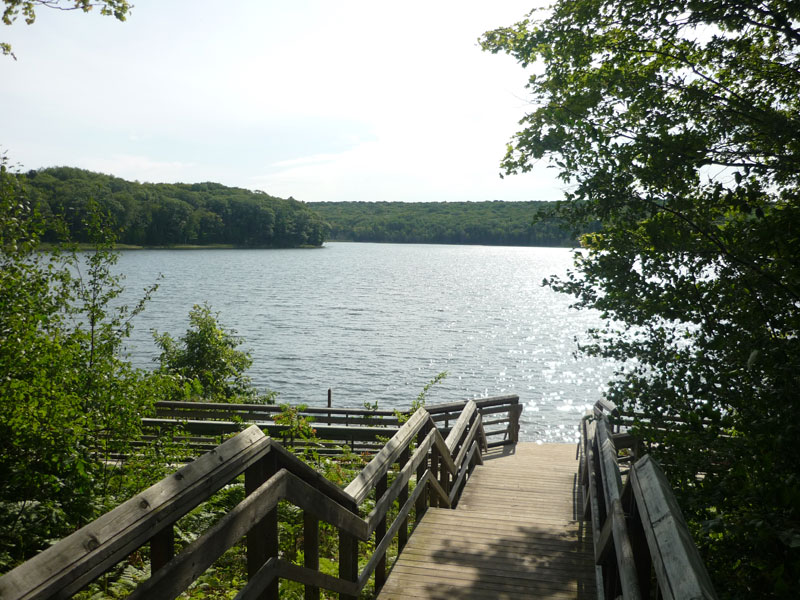
    Located within Balsam Lake Provincial Park, Ash Campground provides campers with a peaceful setting surrounded by lush forests and close proximity to the shimmering waters of Balsam Lake. The campground features a mix of campsites suitable for tents and trailers, with options for both electrical and non-electrical hookups. Each site is equipped with a picnic table and fire pit, allowing visitors to enjoy classic camping experiences like outdoor cooking and evening campfires.

    Modern comfort stations with flush toilets and showers are conveniently located within the campground, ensuring a comfortable stay for all guests. Additionally, potable water taps are scattered throughout the area, providing easy access to fresh drinking water.

    Swimming and Beach Fun

    A short walk from the campground leads to a sandy beach area, perfect for swimming, sunbathing, or building sandcastles. The clear waters of Balsam Lake provide a refreshing escape during warm summer days.

    Boating and Fishing

    Balsam Lake is part of the Trent-Severn Waterway, making it an ideal spot for boating enthusiasts. Canoes, kayaks, and paddleboats are available for rent at the park, allowing visitors to explore the lake’s scenic beauty. Anglers can try their luck fishing for species like bass, walleye, and muskie.​

    Hiking Trails

    The park boasts several hiking trails that meander through diverse landscapes. The Lookout Trail offers a moderate 2.6 km hike culminating in a panoramic view of the surrounding area, while the Plantation Trail provides a 4.2 km journey through reforested areas, highlighting the park’s natural regeneration efforts.​

    Balsam Lake Provincial Park Ash Campground Map - © King's Printer for Ontario, 2025
    Balsam Lake Provincial Park Ash Campground – © King’s Printer for Ontario, 2025

    Park Blog

    • Ontario Provincial Parks With the Best Hiking Trails

      Ontario Provincial Parks With the Best Hiking Trails

      Discover nine Ontario Provincial Parks with some of the best hiking trails in the province. From scenic Lake Superior lookouts and challenging mountain climbs to waterfalls and easy family-friendly walks, explore outstanding hiking destinations. Compare trail distances, difficulty levels, and attractions, and find practical tips to help plan your next Ontario hiking adventure.

    • Where to Eat Near Pinery Provincial Park

      Where to Eat Near Pinery Provincial Park

      Looking for somewhere to eat while camping at Pinery Provincial Park? Discover restaurants, cafés, pizza, pub food and easy takeout options in nearby Grand Bend and Port Franks, plus convenient food choices inside the park. Find ideas for breakfast, lunch or dinner when you’re ready to give the camp stove a break.

    • Visiting Sleeping Giant Provincial Park What You Need to Know

      Visiting Sleeping Giant Provincial Park: What You Need to Know

      Discover Sleeping Giant Provincial Park near Thunder Bay, from camping at Marie Louise Lake and hiking the famous Top of the Giant to paddling, cycling, fishing, and shorter nature trails. Learn what to pack, where to camp, when to visit, and what you should know before exploring this spectacular Northern Ontario park.

    • Radio-Free Campgrounds in Ontario Provincial Parks

      Radio-Free Campgrounds in Ontario Provincial Parks

      Looking for a quieter camping experience? Discover radio-free campgrounds in Ontario Provincial Parks, including options at Awenda, Bon Echo, Algonquin, Grundy Lake, MacGregor Point, Balsam Lake and more. Learn what radio-free camping means, how it differs from generator-free camping, and how to choose the right campsite for your next Ontario adventure.

    • Family-Friendly Ontario Provincial Parks Worth Visiting

      Family-Friendly Ontario Provincial Parks Worth Visiting

      Discover some of the best family-friendly Ontario provincial parks for camping, swimming, hiking, paddling, wildlife watching, and outdoor adventures. From Sandbanks and Pinery to Algonquin, Awenda, Killbear, and more, these parks offer plenty of ways for families to enjoy time together outside.

    • Scenic Drives Near Ontario Provincial Parks

      Scenic Drives Near Ontario Provincial Parks

      Discover some of the best scenic drives near Ontario provincial parks, from Highway 60 through Algonquin to the rugged Lake Superior shoreline. Explore beautiful routes near Killarney, Bon Echo, Pinery, the Bruce Peninsula, and Northwestern Ontario, with ideas for viewpoints, small towns, hikes, beaches, and stops along the way.